
In this article
What are the best clothing brands to resell in 2026?
Strong resale opportunities span luxury labels like Gucci and Chanel, heritage brands like Levi’s, and nostalgia-driven names like Vans and Guess. But brand recognition alone doesn’t make an item worth selling online. Condition, demand, selling price, and marketplace competition all matter.
What are the best clothing brands to sell on eBay?
Luxury and designer brands such as Louis Vuitton, Gucci, Burberry, Chanel, Prada, and Dior continue to attract strong buyer activity on eBay. Emerging and trending brands can also create opportunities, but thrift sellers should compare recent sales, pricing, and competition before listing.
What makes a clothing item valuable for thrift e-commerce?
Thrift operators should consider an item’s condition, average selling price, sell-through rate, marketplace competition, seasonality, and cost to process. The strongest e-commerce candidates combine healthy demand with enough potential margin to justify listing them online.
For thrift stores, few categories have as wide a value range as used clothing. One donated shirt may be worth only a few dollars or be better suited for recycling. While another could be a high-demand vintage tee, designer jacket, or luxury accessory worth significantly more online.
The challenge is knowing the difference. Brand names can be an important differentiator, but it’s only part of the equation. Condition, demand, selling price, competition, and even the specific style or era can determine whether a clothing item belongs on the retail floor or in an e-commerce workflow.
So which clothing brands are creating resale opportunities in 2026, and what should thrift teams look for beyond the label?
Which clothing brands have strong resale potential?
Spoiler alert: brand alone doesn’t make used clothing valuable. Condition, style, demand, rarity, and the specific item all play a role. But brand recognition can be a useful first identifier, because some labels have larger buyer audiences, stronger resale histories, or growing demand.
ThredUp’s 2026 Resale Report shows just how varied those opportunities can be. Its most-shopped brands by order volume include J.Crew, Zara, LOFT, Old Navy, and Gap. Meanwhile, brands including Lands’ End, J.Jill, Everlane, Lilly Pulitzer, and Michael Kors are seeing renewed resale growth.
Clothing brands can be widely purchased without commanding a high selling price, while another may have lower overall volume but stronger growth or more valuable individual items.
The label gets an item into consideration, but the item itself determines whether it belongs online.
How pearldive helps thrift teams identify valuable clothing at intake
The donation sorting process is Ground Zero for mis-identifying and mis-categorizing valuable thrift items. Pearldive Ama Sorter uses AI decision-making support to help intake teams quickly find and route high-value items. It also offers curated guides that help thrift operators understand brand value and market trends. Learn how Goodwill Houston got 46% Increase in Sales in 30 Days with pearldive.
The best clothing brands to sell on eBay
The same fundamentals apply no matter where you sell: brand recognition can help, but demand, selling price, competition, and the specific item ultimately determine whether clothing is worth listing online.
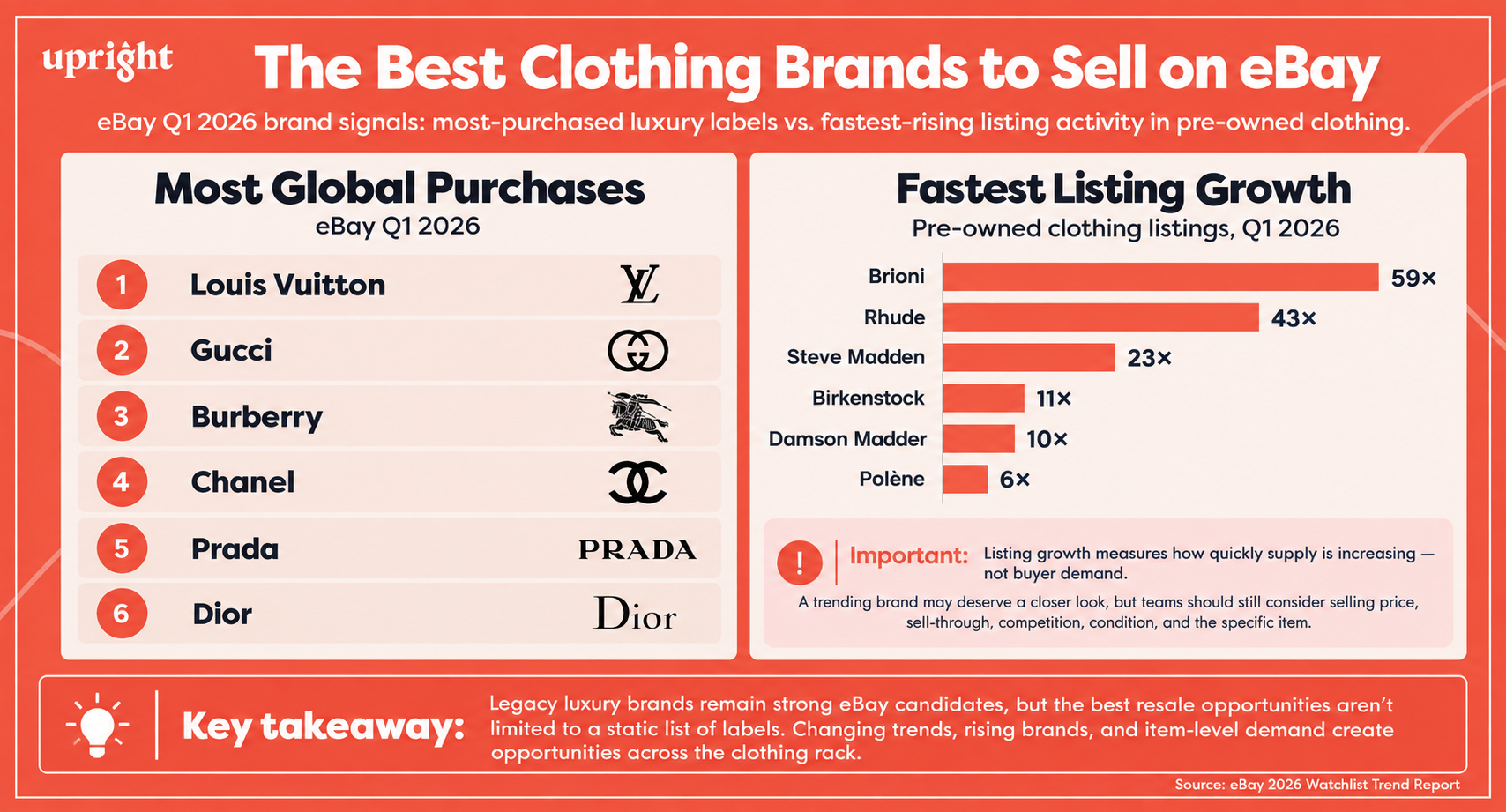
On eBay, well-known luxury and designer brands continue to attract strong buyer activity. According to eBay’s 2026 Watchlist Trend Report, these brands led global purchases in Q1 2026:
- Louis Vuitton
- Gucci
- Burberry
- Chanel
- Prada
- Dior
But purchase volume tells only part of the story as seller activity is shifting quickly, too. Among pre-owned merchandise, eBay reported significant Q1 2026 listing growth for several brands:
- Brioni: 59×
- Rhude: 43×
- Steve Madden: 23×
- Birkenstock: 11×
- Damson Madder: 10×
- Polène: 6×
That doesn’t necessarily mean these brands are selling 59× or 43× faster. Listing growth measures how quickly supply is increasing. Not buyer demand.
A recognizable or trending brand may deserve a closer look, but teams should still consider recent selling prices, sell-through, marketplace competition, condition, and the specific item before routing it to e-commerce.
Legacy luxury brands remain strong eBay candidates, but the best resale opportunities aren’t limited to a static list of labels. Changing trends, rising brands, and individual product demand can create opportunities across the clothing rack.
Clothing trends worth watching on ShopGoodwill
ShopGoodwill is also home to designer and collectible fashion, but one clothing trend deserves particular attention in 2026: vintage and nostalgia-driven apparel.
Interest in 1990s clothing continues to put familiar names like Tommy Hilfiger, Calvin Klein, Levi’s, Guess, and Vans back on the radar. Items tied to recognizable eras, styles, or cultural moments can attract buyers looking for something harder to find in traditional retail.
That makes accurate identification especially important. A seemingly ordinary jacket, pair of jeans, or graphic tee may have significantly more value when the right brand, era, or style details are recognized.
Here are a few vintage identifiers to look for:
- Brand: recognizable heritage or nostalgia label
- Era: tags, logos, construction, graphics
- Style: workwear, denim, streetwear, band tees
- Rarity: discontinued designs or limited availability
- Condition: appropriate for the category and age
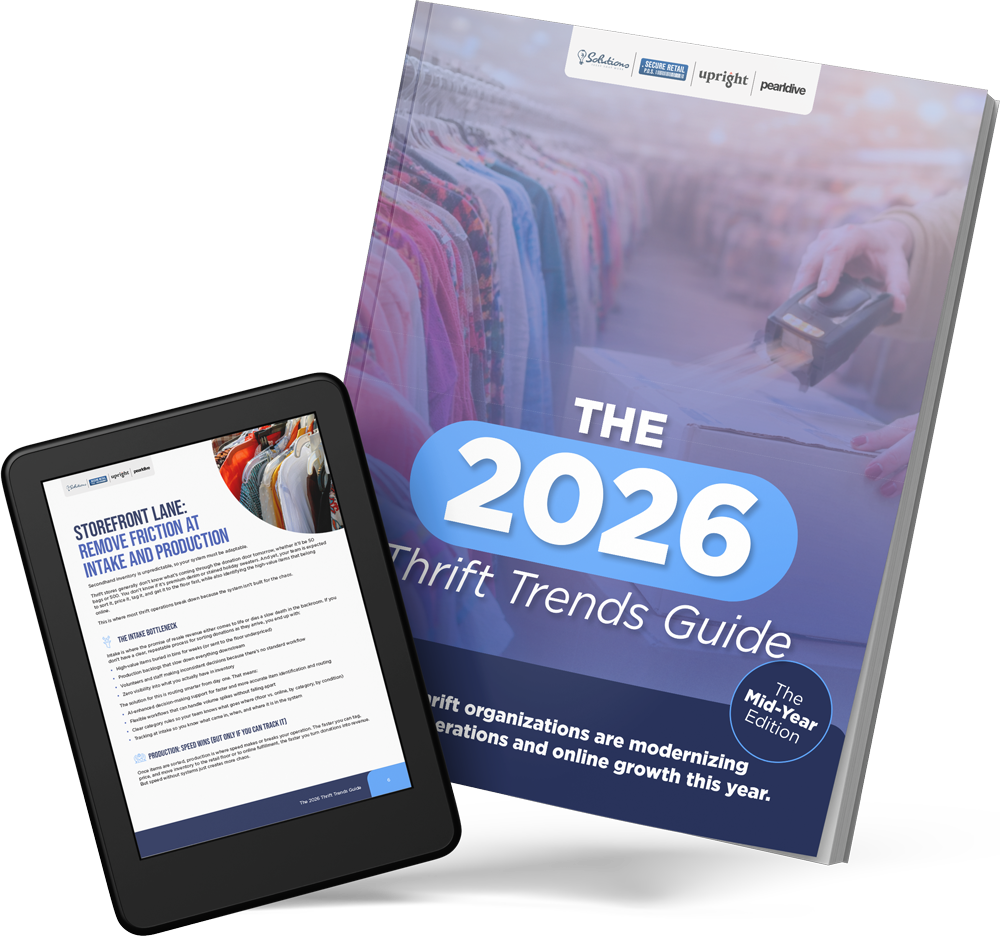
For info on spotting and routing high-value items to the right sales channel and 2026 e-commerce category trends, download your free copy of our 2026 Thrift Trends Guide.
Value is about more than just brands
Which is the better e-commerce opportunity: a designer item with a high potential selling price but low demand, or a mid-range item that sells quickly and consistently?
There isn’t always one right answer. That’s why thrift e-commerce success depends on more than finding recognizable brands. The best candidates combine potential selling price, buyer demand, manageable competition, and enough margin to justify the work required to sell them online.
Here are six factors thrift teams should consider:
- Average Selling Price (ASP): The average price comparable items actually sell for over a given period. ASP can be measured by brand, category, subcategory, or even a specific product type. A high asking price means little if buyers aren’t actually paying it.
- Sell-Through Rate (STR): The percentage of listed inventory that sells within a given period. Higher sell-through can indicate stronger demand and help distinguish items that are merely valuable on paper from those buyers are actively purchasing.
- Marketplace Competition: Look at how many comparable items are competing for buyers. A category with thousands of similar listings may be difficult to sell even when the brand is recognizable. Lower competition combined with healthy demand can create a stronger opportunity.
- Category and Subcategory: Broad categories can hide valuable niches. A standard used T-shirt may have limited online value, while a vintage concert tee, rare sports shirt, or sought-after graphic could command significantly more. Accurate item identification matters.
- Seasonality and Timing: Demand changes throughout the year. Coats, boots, swimwear, formalwear, and other seasonal categories can perform differently depending on when they are listed. Getting inventory online before peak demand can improve its opportunity to sell.
- Processing Economics: An item still needs enough potential margin to justify the labor and costs required to photograph, research, list, store, sell, and fulfill it. A $15 item that requires extensive research may be less attractive than a $35 item that can move through the workflow quickly.
Condition doesn’t always mean “like new”
Condition matters, but its impact varies by category.
For many contemporary items, cleaner and less-worn usually means greater resale appeal. But vintage denim, workwear, band tees, and other collectible categories can be different. Fading, distressing, older construction, graphics, tags, or other signs of age may actually contribute to an item’s desirability when they help establish authenticity or character.
That’s another reason thrift teams need to evaluate the specific item, not simply the logo on its tag.
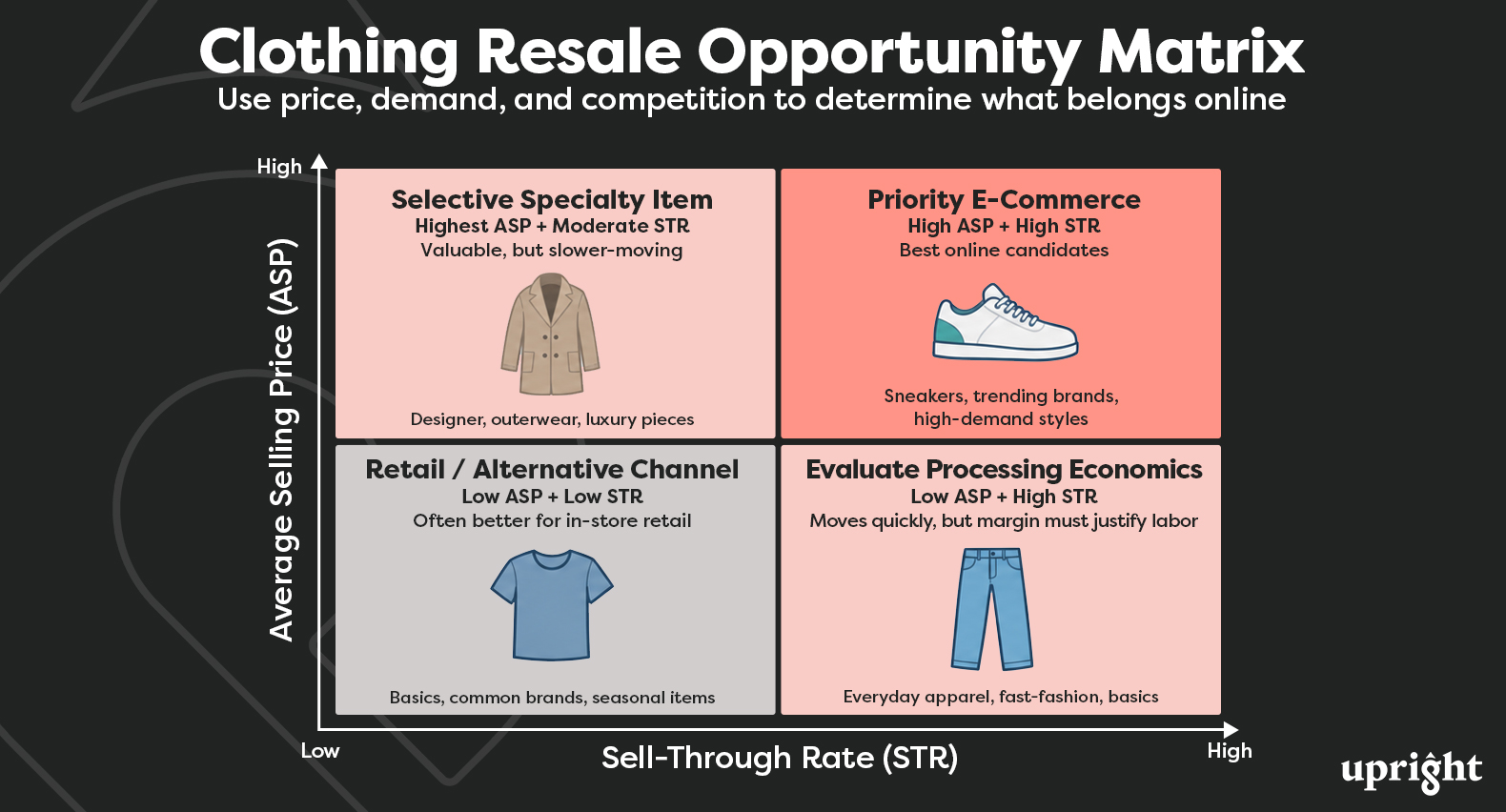
A simple framework for evaluating clothing for e-commerce
Think about resale opportunity across these differentiators:
- High ASP + High STR + Manageable Competition: Strong e-commerce candidate
- High ASP + Moderate STR + Low Competition: Strong niche or specialty candidate
- Moderate ASP + High STR + Low Processing Cost: Potential high-volume opportunity
- Low ASP + Low STR + Heavy Competition: Often better suited for the retail floor or another sales channel
Many recognizable, mass-produced brands can fall into that final category. High name recognition doesn’t necessarily mean high resale value when supply significantly exceeds buyer demand.
For thrift operators, the goal isn’t simply to find the biggest brand name. It’s to identify the items with the strongest opportunity for the right sales channel.
What clothing brands have resale value for your thrift operation?
E-commerce might expand your thrift operation’s reach, but it’s still subject to the law of supply and demand. When it comes to reselling clothing, that demand is about more than just brand names. Condition, sell-through rates, average selling prices, and listing volume all influence what you can expect an item to bring in.
As with many areas of thrift e-commerce, correctly identifying and routing the clothing brands and items with high resale value is key to success. Learn how you can make these decisions quickly and accurately with pearldive Ama Sorter. You can also learn how you can use Upright Lister and pearldive Auto-Lister to speed up the listing process.