


Uncovering Hidden Value in Glassware Sales with pearldive
In the thrift world, glassware sales go under the radar. Glass is often underpriced because it’s difficult to identify quickly. But small differences in knowledge lead to large differences in revenue.
In time-strapped environments, speed is essential. When teams don’t have time to research every vase, bowl, or decanter, high-value glassware is sold like low-value goods. So how can you identify valuable pieces and price accordingly—without slackening speed?
In our recent Glassware Sales Master Class, we discussed:
- How to identify valuable glassware.
- The current state of the glassware market (and what’s driving demand).
- How to use e-commerce and AI to enhance your glassware sales.
Let’s start with what to look for in valuable glassware.
Unlocking the Hidden Value in Glassware Sales
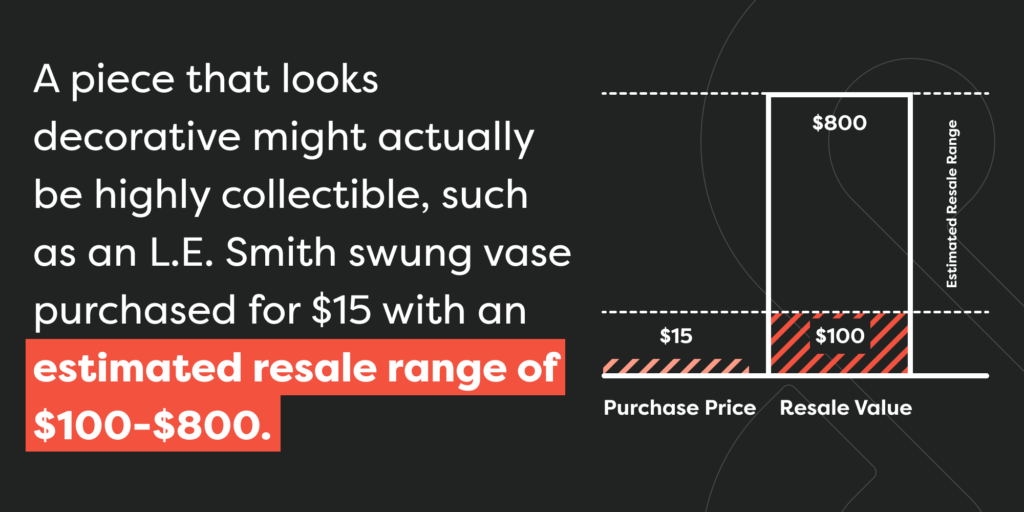
The fastest way to spot hidden value is to focus on signals: color, shape, texture, UV reaction, and visual design cues. Small details like color, texture, or shape can completely change the value. A piece that looks decorative might actually be highly collectible, such as an L.E. Smith swung vase purchased for $15 with an estimated resale range of $100–$800.
In practical terms, this can mean printing out a cheat sheet for workers to use in the intake process (such as the Identification Cheat Sheet included in the slide deck below). You can also use AI to help you research and categorize glassware; pearldive’s Sorter helps teams evaluate goods at intake, instantly receive a recommendation on where the item should go, then move seamlessly into listing with Auto-Lister.
Of course, knowing the value of individual pieces is one thing; understanding demand and market conditions around glassware sales is another.
Market Demand: Glassware Is Growing
Glassware resale volume is up—and buyers are getting younger:
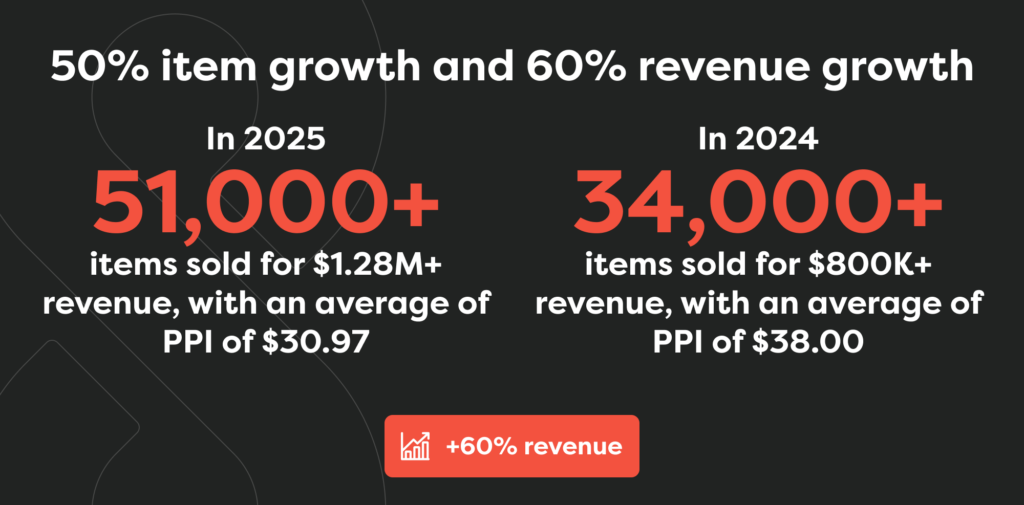
- In 2025, secondhand retailers sold 51,000+ items for $1.28M+ revenue, with an average PPI of $30.97.
- In 2024, 34,000+ items sold for $800K+ revenue and an average PPI of $38.00.
That’s a 50% item growth and 60% revenue growth. What’s driving it? Vintage color is back. Glassware is no longer just collectible. It’s now a part of modern interior styling culture.
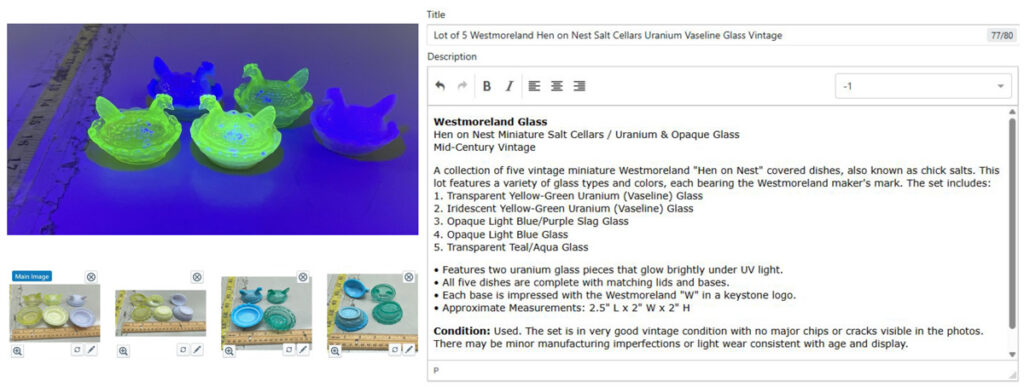
Younger buyers are shaping demand, especially for fun items like “glow glass’ (i.e. uranium or manganese glass that fluoresces under blacklight). These items perform because they’re visually interesting and shareable.
Bottom line: if your team is treating glass like shelf filler, you could be missing out on valuable sales.
But not all sales happen in brick-and-mortar stores; online sales are a vital part of the thrift ecosystem. The third part of the webinar discussed how to build and effective and efficient sales process for glassware.
Glassware Sales in E-Commerce: Discoverability, Trust, and Consistency
A secondhand glassware sales strategy should revolve around three goals:
- Discoverability so buyers can find items online.
- Building confidence and trust by including plenty of information in listings.
- Creating a consistent process that your team can repeat.
When it comes to discoverability, descriptive titles and high-quality photography are essential. Full and accurate item details improve buyer trust (and final sale price) because shoppers understand exactly what they are getting. And that’s critical in online sales, where buyers can’t handle goods in person.
Tools like pearldive can help teams identify glassware faster and create more consistent, high-quality listings at scale.
The pearldive advantage for glassware sales
For thrift store operators, it’s unlikely to find an employee who’s a glass expert. Instead, teams need to be able to identify better glassware on the fly, without extensive training.
That’s where pearldive comes into the picture. It reduces manual research and helps teams produce consistent, keyword-rich listings without needing a specialist on every shift.
AI-powered pearldive can provide information-rich, optimized listings, saving employees the time involved in deep research.
And it also helps set up a repeatable and efficient online sales process.
Watch the Full Glassware Sales Master Class & get 100 pearldive listings free
If glassware sales are regularly flowing through your store(s), you need an optimized system to take some of the load off your teams. We hope this information has helped you get started.
To continue learning about glassware sales in the thrift world, you can watch the full webinar below. And as a special bonus, you can try pearldive absolutely free.
Get the Glassware Sales Master Class resources
Try pearldive (first 100 listings free)
Want to see how AI-powered sorting and listing can improve your workflow and your bottom line?