

The Complete Thrift Ecosystem team exhibited at the 2026 Goodwill Delegate Assembly in Philadelphia this year. The event theme highlighted how thrift leaders can use AI and other tech to enhance their operations and simplify employees’ workflows.
At The Complete Thrift Ecosystem booth, we invited attendees to try our donation sorting challenge. It was a simple challenge, but highlighted the difficulty each Goodwill experiences each day in their backroom:
- Search through a large box of random donated items (representing the average box of donated goods) and pick out the three most valuable finds.
- Take a picture with pearldive Ama Sorter to identify, value, and sort the items for e-commerce or retail.
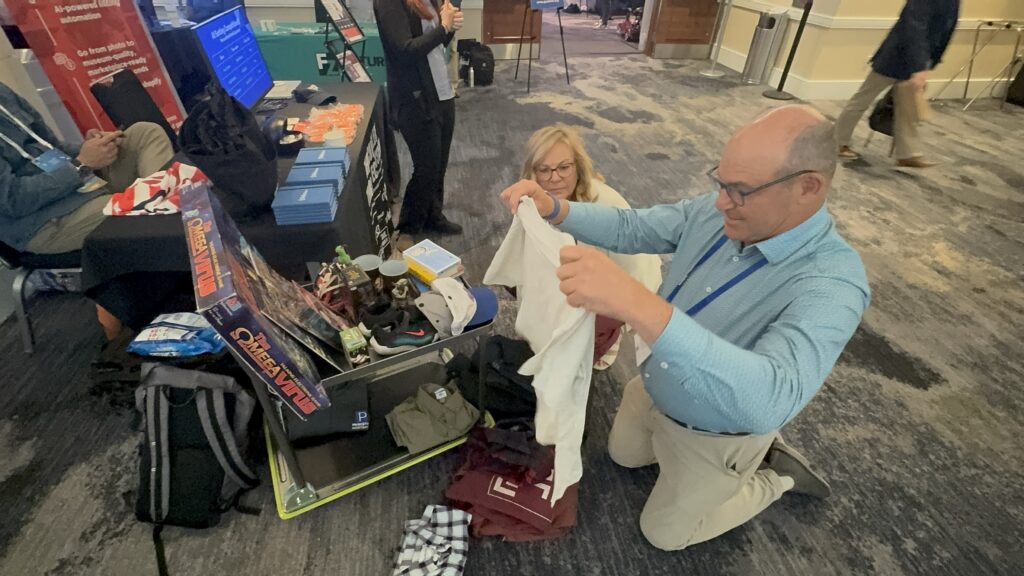
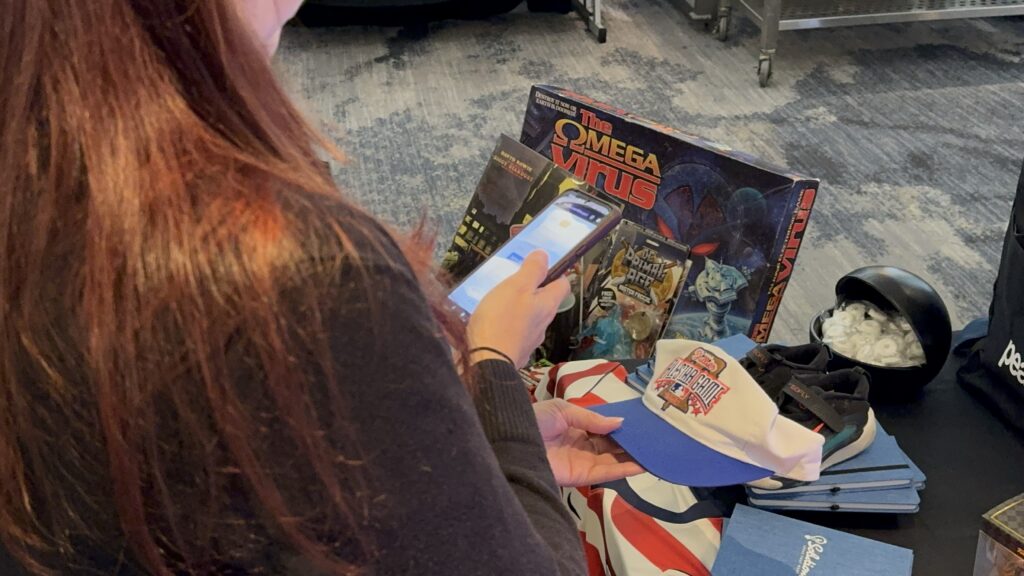
Just like a real warehouse, attendees had a few minutes to rifle through board games, toys, clothing, collectibles, and more to see if they could find the perfect items for e-commerce.
This challenge brought home the reality of thrift intake and e-commerce team’s daily work: Finding big-ticket items among so many donations is hard.
However, this was more than just a fun exercise for Goodwill leaders. It underlined a key shift that’s happened over the last year:
AI is ready for the thrift world now.
1: AI for Thrift Is Happening Now
E-commerce has been tagged as the “Next Big Thing” for thrift stores, but that’s generally old news. What we’re seeing currently is that AI built specifically for thrift ecosystems are driving forward progress.
Pearldive’s AI isn’t meant to replace the people in thrift workforces. It’s designed to help workers identify and route items (Ama Sorter) and streamline e-commerce listing (Auto-Lister). These activities involve lots of repetition, and the huge variety of donated objects guarantees time must be spent on research and writing. Plus, errors in identifying, categorizing, routing, and pricing goods are extremely common.
So while AI tools that aren’t built for thrift can complicate this process, AI that’s specifically for thrift teams provides immediate assistance when decisions are made. Tasks that took 20 minutes can now be completed in seconds. The technology is here and it’s already being incorporated into daily workflows.
2: Knowledge Is Not Enough
Physically digging through a donation cart, trying to quickly parse where the most value lies, gave our visitors a realistic look at what intake employees do every day—and why the process is so complex.
It also highlighted that judgement and experience are not enough for sorters and listers. The most valuable item is not always the most obvious one; it can take an expert eye to distinguish a collectable vintage toy from an old doll. Among such variety, there’s no way even very experienced teams can identify everything on their own. They need accurate and reliable assistance to keep up with the pace of goods.
3: Connected Ops Are More Important Than Ever
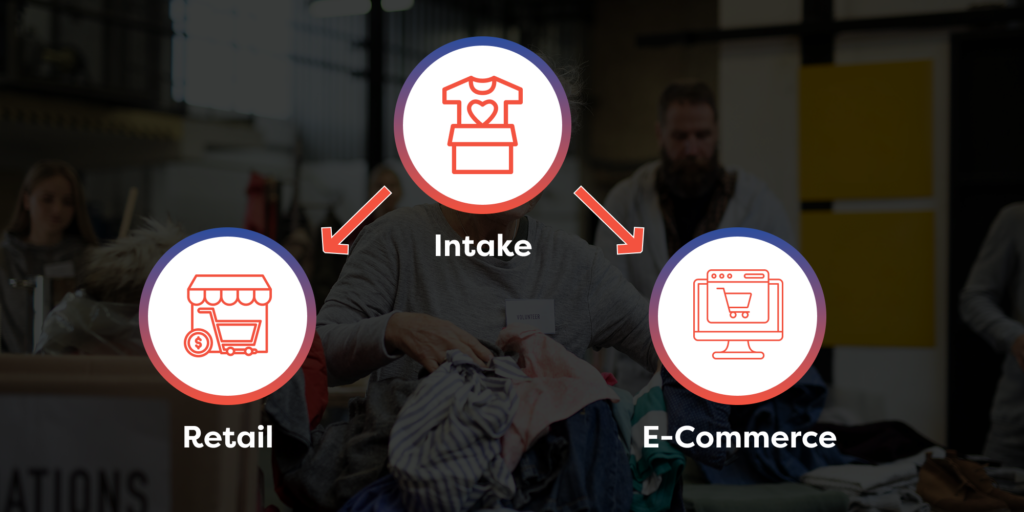
Zooming out, we can see another secondhand retail truism: sorting and intake are just one part of a web of other processes. Once items are sorted, they also move into retail, inventory, and POS—or through e-commerce, inventory, and fulfillment. Many items take both journeys.
To avoid unnecessary duplication and effort, a connected resale ecosystem is a must for operations of all sizes. That’s why we’ve built The Complete Thrift Ecosystem:
- pearldive Ama Sorter acts as an intelligence layer, helping teams make accurate identification and routing decisions.
- Solutions ITW and Secure Retail connect POS, tagging, inventory, and store operations for a smooth retail experience.
- Upright Lister and pearldive Auto-Lister help teams quickly and accurately list e-commerce items.
- All tools share data and use a single tag to monitor each item as it moves through various areas.
As thrift organizations embrace technology as a means to fulfill their missions, connecting the various parts of their ecosystem is vital. A single tool is not enough to streamline operations; it takes a suite of specialized programs working together to efficiently meet the growing needs of thrift stores.
From the Sorting Box to Connected Systems
So, while Goodwill leaders were pulling items out of a donation bin, it became an object lesson in how complicated and interconnected secondhand retail really is—and why teams need connected, AI-assisted workflows.
If you’d like to see how pearldive Ama Sorter can help your team, connect with our team for a demo. Or check out our free pearldive Auto-Lister ROI Calculator to see how much e-commerce sales you could be missing.