

In this article
Should thrift sellers use Auction or Buy It Now on eBay?
For most thrift e-commerce inventory with reliable pricing data, Buy It Now is the better default. Auction-style listings are better suited for rare, unusual, or difficult-to-price items when there is enough buyer demand to create meaningful competition.
What’s the best eBay listing type for collectibles?
It depends on rarity, pricing data, and buyer demand. Common collectibles with established market values are usually better suited for Buy It Now. Rare collectibles can perform well at auction when multiple motivated buyers are likely to compete for the item.
How should thrift stores sell rare donated items?
Start by correctly identifying and authenticating the item, researching recent comparable sales, and evaluating how many buyers are likely to want it. If demand is strong but the market value is difficult to establish, an auction can let buyers determine the final price. If buyer demand is limited or reliable sales data exists, a fixed price may provide more control.
eBay may have built much of its early reputation around online auctions, but sending a donated item to e-commerce no longer automatically means putting it up for bid.
Today, thrift sellers have two very different tools available to them. Fixed-price Buy It Now listings give sellers control when an item has a reasonably established market value. Auctions let buyer competition help determine the final price when value is less certain.
eBay itself makes a similar distinction: Buy It Now works well when you know what an item is worth, while auction-style listings allow interested buyers to determine its value through bidding.
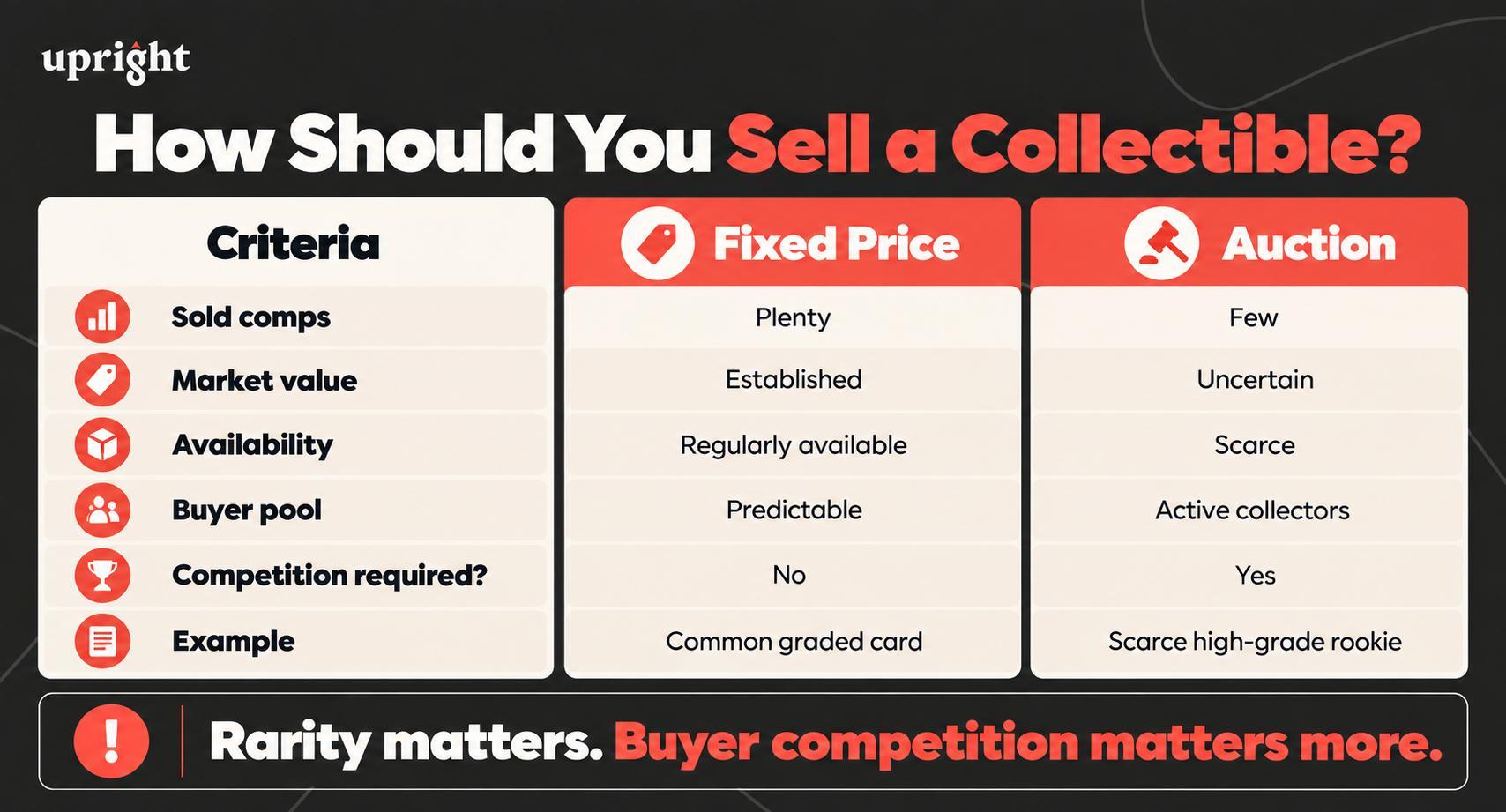
For most repeatable thrift e-commerce inventory, fixed pricing should be the default. Auctions become more useful when three things come together: rarity, uncertain market value, and enough buyer demand to create competition.
Knowing the difference can help thrift organizations improve sell-through, reduce unnecessary relisting and storage, and capture more value from exceptional donated goods.
How Auctions and Buy It Now Listings Actually Work
The decision between auction and fixed price comes down to one question:
Do you already have enough market information to set a confident price, or do you need buyer competition to help discover the item’s value?
The same principle applies across eBay, ShopGoodwill, and other marketplaces that support multiple listing formats, even though the mechanics differ by platform.
On eBay, fixed-price listings use Buy It Now and are set to Good ’Til Canceled by default, meaning the listing renews monthly until it sells or the seller ends it. Auction listings run for a defined period—typically 1, 3, 5, 7, or 10 days. Sellers can also add Best Offer to eligible listings, giving buyers room to negotiate without moving the item into a full auction.
ShopGoodwill similarly supports auction listings and fixed-price Buy It Now listings, but the platform handles them differently. For example, its non-auction Buy It Now listings can remain available until payment is completed or the listing ends.

When to Use Buy It Now
For most repeatable thrift e-commerce inventory, fixed pricing should be the default.
Buy It Now works best when you have enough information to establish a reasonable market price. That usually means there are recent comparable sales, recognizable product attributes, or an established price range for the item.
eBay itself recommends reviewing similar items when setting a fixed price and may provide pricing guidance based on recently sold comparable merchandise. Its pricing tools can include sold-price ranges and other market data in supported categories.
The following goods and categories are a strong fit for fixed-price listings:
- Items that have clear price ranges, i.e., based on brand, condition, etc.
- Highly searchable items, such as “Women’s Patagonia Rain Jacket XL” or “All-Clad Silver Saucepan”
- Clothing, shoes, and accessories—especially in-demand categories and brands
- Electronics, mobile devices, computers and accessories, and video game consoles
Fixed pricing also creates operational advantages for thrift teams.
You know the target sale price before the item is listed. The listing can remain active without employees manually recreating it after a short auction window. And when similar merchandise repeatedly enters the donation stream, teams can reuse category knowledge, item specifics, shipping settings, and listing templates.
On eBay, fixed-price listings can also use Best Offer, which gives sellers flexibility to test pricing or accept a lower offer without giving up control of the asking price.
The key point is that Buy It Now does not have to mean guessing at a conservative price.
Good comp research should answer:
What have comparable items actually sold for? Not what are other sellers asking.
When Auctions Are the Right Choice
An auction is better viewed as a price-discovery tool.
Instead of deciding the final selling price in advance, the seller establishes a starting point and allows competing buyers to determine how high the item goes.
That works best when three conditions come together:
- Scarcity
- Price Uncertainty
- Buyer Competition
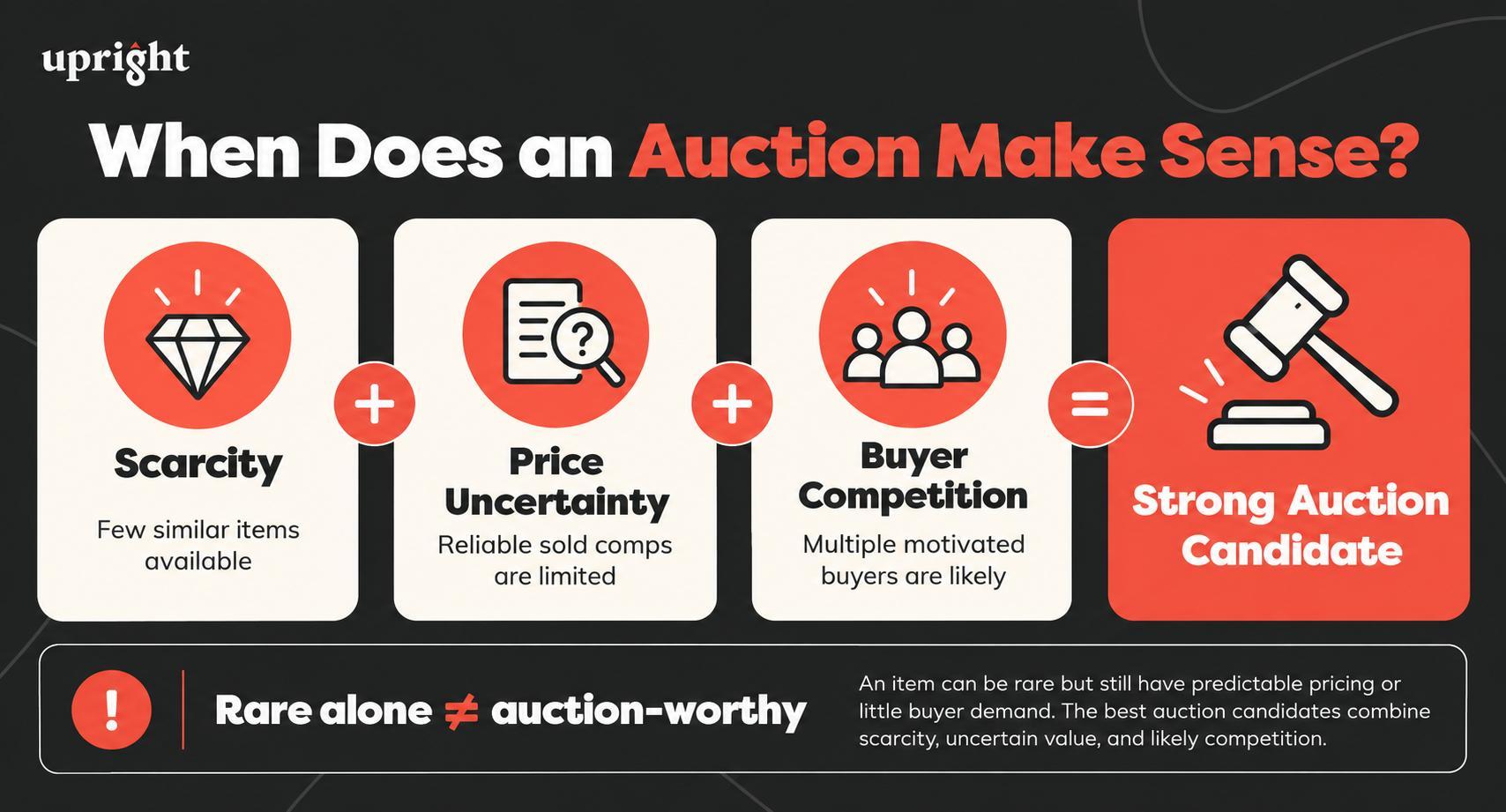
Strong auction candidates include:
- Rare or unique items with few reliable comparable sales
- Collectibles with an active base of knowledgeable buyers
- Items experiencing unusually strong demand but limited supply
- Variations, prototypes, vintage pieces, or unusual configurations that are difficult to value using normal comps
- Items where multiple serious buyers are likely to compete within the auction window
Rare does not automatically mean auction-worthy.
An item can be extremely rare and still have very few potential buyers. If only one shopper is interested, an auction creates little competitive pressure and may produce a lower sale price than a well-researched fixed-price listing.
Likewise, an expensive item does not automatically belong at auction. If reliable comparable sales clearly establish its market value, fixed pricing may give the seller more control.
Auctions make the most sense when the market has enough demand to do something useful with the uncertainty.
The Hidden Costs of Selling Everything as Online Auction
Auction-style listings can be useful for price discovery, but using them too broadly can create costs that aren’t obvious when the item first goes live.
The issue isn’t that auctions can be inefficient. The wrong auction candidate can tie up inventory, employee time, and selling capacity without creating enough buyer competition to justify it.
Three costs matter most:
- Slower inventory turnover
eBay auction listings typically run for 1, 3, 5, 7, or 10 days. If the item doesn’t sell, it may need to be relisted, extending the time it remains in storage before generating revenue. Fixed-price listings, by comparison, stay active as Good ’Til Canceled until they sell or the seller ends them. - Downside risk when buyer competition is weak
An auction only creates price discovery when multiple buyers are willing to bid. If interest is limited, the item can sell near its starting price—or receive no bids at all. eBay itself recommends auction-style selling when the goal is to let buyers determine what an item is worth, which makes the depth of the buyer pool especially important. - More listing-management work when items don’t move
Unsold auctions may need to be relisted or reviewed. eBay does support automatic relisting in some cases, but availability varies by seller type and listing setup. Manual relisting can also count against zero-insertion-fee allowances or incur listing fees after those allowances are exhausted.
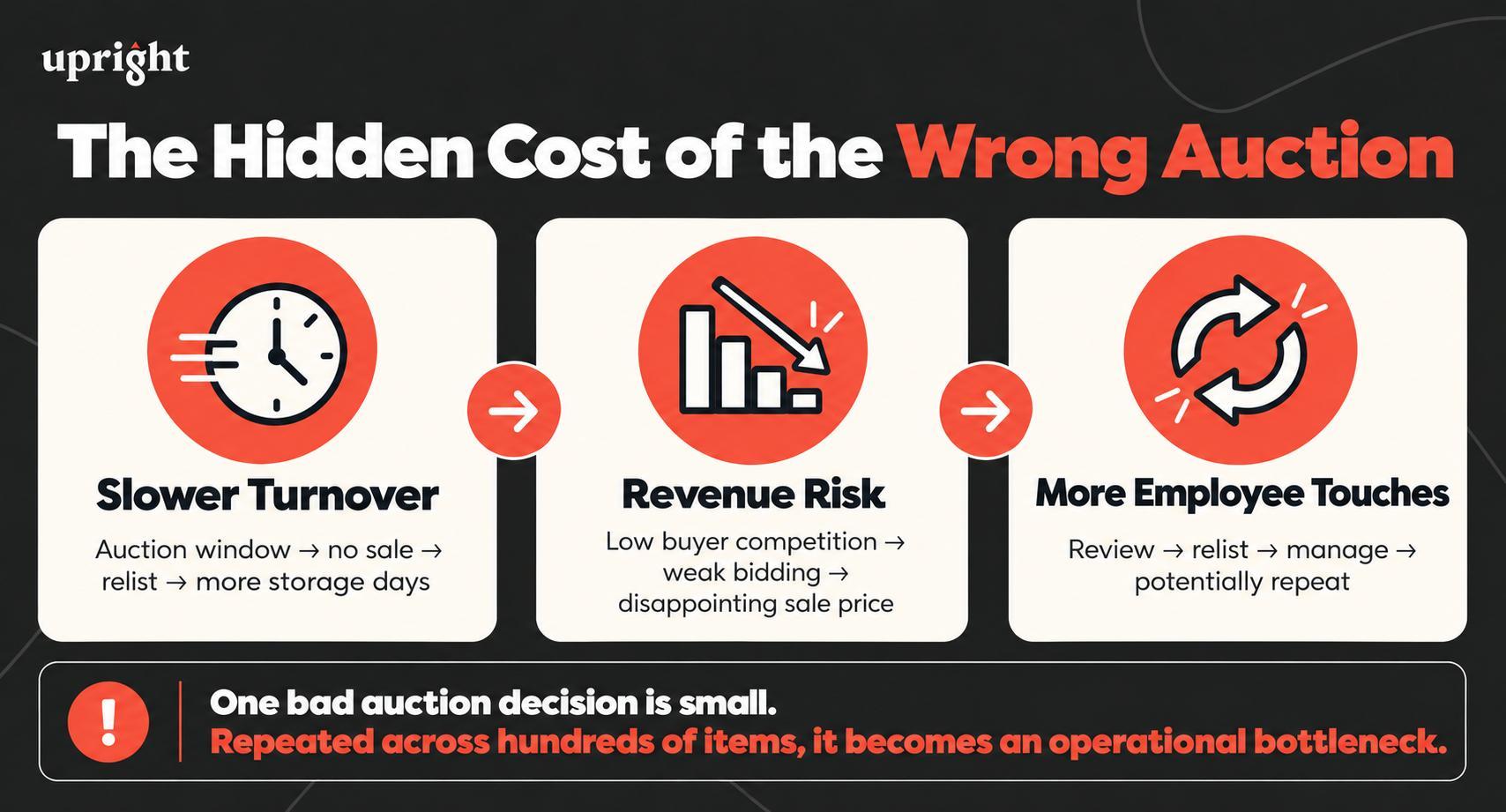
For a thrift e-commerce team processing hundreds or thousands of one-off donated items, those small inefficiencies can compound.
A poor auction candidate doesn’t just risk a disappointing sale price. It can also occupy shelf space longer, require additional employee touches, and delay the next item from moving through the workflow.
The better question isn’t “Could this item go to auction?” It’s “Is there enough buyer competition to justify putting it there?”
The Best Listing Type for Collectibles
Not all collectables are high-value items. This category can be divided into two distinct groups:
Standard or mass-produced collectibles are widely available. Think vintage tableware, dolls and decorative items, etc. While they have some value, they’re not rare and serious collectors probably aren’t searching for them. These do well in Buy It Now.
Rare collectibles include things like first-run books, a Hall of Famer rookie card in mint condition, and unread vintage comics. These will get collectors excited, and an auction can take advantage of that interest to generate max revenue.
Answering ‘Should I Auction or Sell Fixed Price?’
Knowing the difference between an auction and a fixed-price listing is one thing. Applying that decision consistently across hundreds or thousands of donated items is harder.
That’s where clear guidelines, training, and the right tools matter.
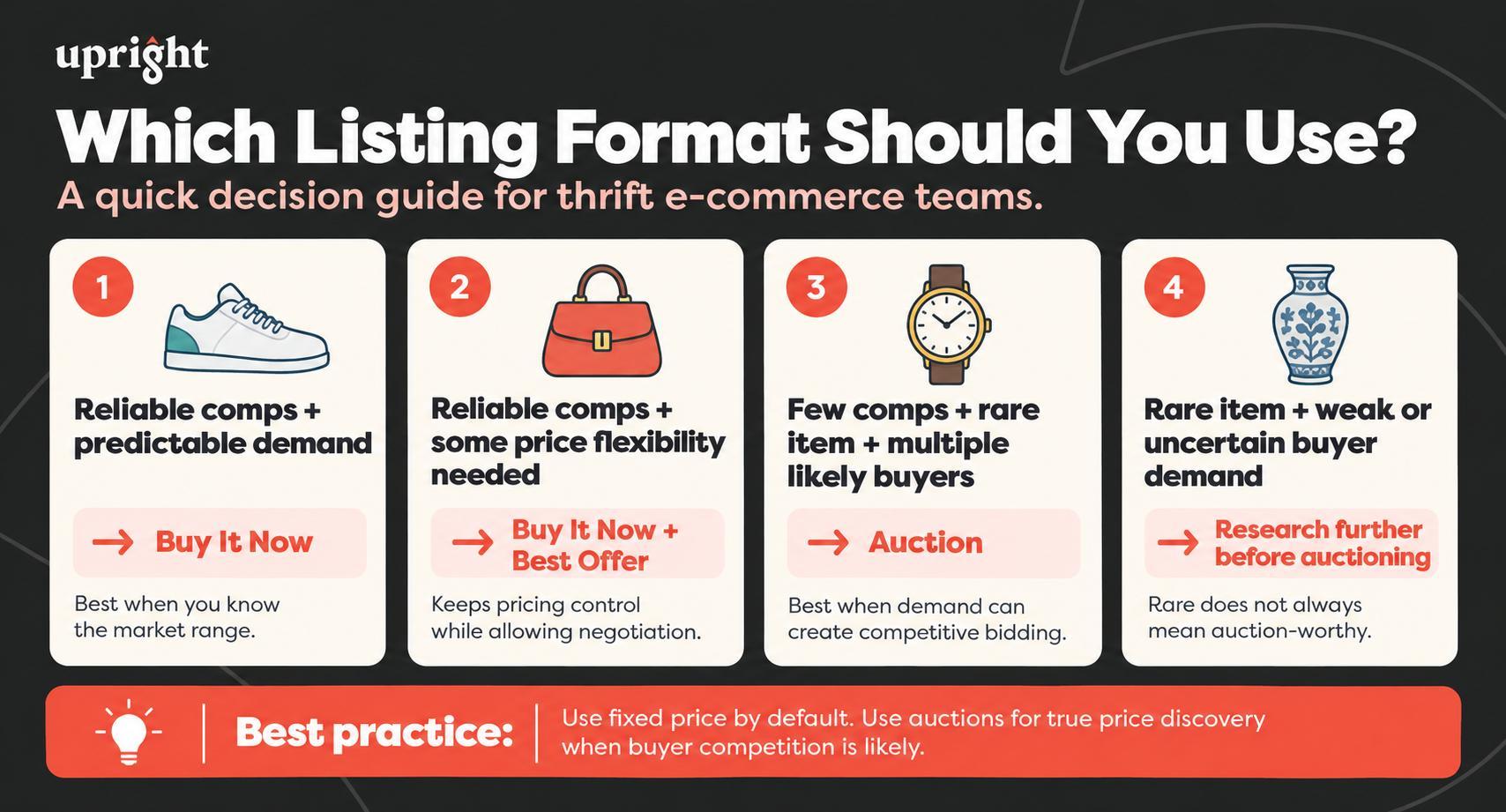
A thrift e-commerce team can establish rules such as:
- Use fixed price when reliable comps and predictable demand exist
- Use Best Offer when the market range is clear but some pricing flexibility makes sense
- Consider auction when comps are limited and multiple motivated buyers are likely to compete
- Research further when an item is rare but buyer demand is unclear
The challenge is getting employees the information they need to make those decisions quickly at the point of processing.
pearldive Ama Sorter helps teams identify items, understand potential value, and evaluate market context earlier in the workflow. That gives employees more information when deciding whether an item belongs in retail, e-commerce, or additional review.
Once an item is routed online, Upright Lister helps standardize and speed up the listing process, reducing the manual work required to move inventory from research to marketplace.
The goal is to make the right listing-format decision for each item and make that decision without creating another bottleneck.
For more on improving item identification, routing decisions, and thrift e-commerce performance, download the free 2026 Thrift Trends Guide.
And if you want to see how pearldive can fit into your workflow, new customers using Upright Lister can try their first 100 AI listings for free.